Monday, June 13, 2011

Migration and Masai Mara


Migration and Masai Mara

We are at that stage of our African adventure where our social balance is possibly in question. Are we becoming more feral than is healthy and forgetting the usual social norms?! When cooking on a smoky fire is standard, using a squat pit latrine in preference to a flush one, vigorously recycling clothes and reminding Zara that using a spoon and fork in preference to her hands might be a good idea! That said, we feel a harmony with the land and the people we meet and revel in this raw African experience away from our normal organized and sophisticated lives. We have turned the corner (geographically not metaphorically!) crossing the Equator for the second time and now in Kenya, start our migration south.

From the Rift valley we are headed for the Masai Mara game reserve in the south of the country, but have many pleasant surprises to come on our way. We drop dramatically from our high perch on the Rift Valley escarpment down into the Kerio valley and, with a busload of excited, local school kids, marvel at a deep river gorge and spy a resident croc. We climb steeply again up the far side of the valley and are headed for Kembu farm and camping in the Highlands, were many white settlers enjoyed their colonial life of old. We shun the conventional route and stick to the spine of the escarpment enjoying dramatic views of Lakes Baringo and Bogora in the Rift valley below but are once again on a rough pot-holed ‘tar’ road. We stop for our favourite local lunch of Chapatti, beans and chai and for about R14 reckon we are doing pretty well!

Kembu Farm is owned and run by the Nightingale family, who have been in Kenya for a few generations, and is a fascinating, co-operative, comprehensive, community involved enterprise. Various family members run the dairy and horse stud, agriculture, camping and cottages and the wool weaving project. We share the campsite with a couple of novice overland trucks fresh form Nairobi and erect our tents not far from the milking sheds with a good waft of cow! Margot and Zara waste no time and are soon exploring the dairy, bottle feeding calves, walking with highly strung yearlings being prepared for sale and romping in massive mountains of hay bales. We purchase fresh milk from the dairy and enjoy the luxury of a bar/restaurant and that evening, a lovely wood fire. Ilda works marvels with home baking managing to bake bread in the hot water “donkey” and I enjoy an early morning jog with the 15yo Nightingale son who is training for his rugby season. It is winter chilly in the morning and at about 2400m the air is thin. We visit the wool weavers as the morning school project and are impressed by the home spun wool, natural dyes and hand knitted wares that, like Kenyan fruit and flowers, are exported around the globe.

From Kembu we choose a cross-country route again that our guide book describes as “a good dirt road that could become problematic in the rainy season” and skirt massive potholes and trenches but are spared the deep mud. Zara buys hot roasted corn-on-the-cob from a street vendor and we arrive at the Masai town of Narok. Like most Kenyan towns, and in stark contrast to Rwanda, the filth and litter is appalling, but we dine in an excellent local restaurant on our usual chapatti, chips and fried cabbage washed down with sweet hot milky chai. We are impressed by the hand washing facilities where neatly cut newspaper serves as hand towels and Ilda buys fresh fillet at the entrance of the restaurant where a large carcass is suspended from a meat hook above. The meat was surprisingly good and we seem to have suffered no ill effects.

The road from Narok to the Masai Mara has comfortably earned the mantle of our worst road in Africa, making even those in the west of Tanzania seem pretty smooth. Massive pot holes, remnants of tar, rough gravel and dust, lurched and rocked the poor Pathfinder to the limit and we were surprised at this poor access to Kenya’s iconic park. But then most guests probably fly in anyway! The trip was alleviated slightly by good sightings of giraffe, wildebeest and occasional strutting warthog. We pass Masai hamlets in almost desert-like over-grazed countryside, and their herds of cattle, and find this blurred mix of game and livestock interesting. We arrive at dusk at the Sekanani gate and skirt west on a vague track to avoid entering the park and the exorbitant park fees. We are headed for the Talek riverside camp and after about five minutes the deluge started. I think that we now have some idea of what Noah must have felt sitting in his ark. The arid ground was impermeable and our surroundings turned rapidly into a lake and rushing rivers. I will admit to having some concern for our safety and that of the Pathfinder and we were relieved to link up with a Bakkie laden with locals who, through a slit in the window and bucketing downpour, shouted, “We go together!” We skidded, slipped and sloshed after them and, to avoid a flooded Talek river, detoured into the park onto better roads and even enjoyed some good sightings of beautiful Topi, large herds of Zebra and hyena. Again, the lack of a boundary park fence meant that we frequently encountered herds of Masai cattle intermingled with game. The complete lack of grazing outside the park makes this their only hope, but I wonder how sustainable this will be and whether man’s encroachment will once again be at the expense of Africa’s wildlife.

We find, with some relief, the Talek campsite and the inevitable overland truck with its skitterish load of English backpackers. We erect our tents in the now abating rain and get an early night in preparation for an early start. Our Masai guide directs us into the park through a ‘back’ entrance and we are struck by how different this park is, with its massive meadows and savannah and paucity of bush and trees, to those of South Africa. On the plus side though, it is easy to spot game and we soon see massive herds of zebra, wildebeest and a herd of about 1000 buffalo. We are about two weeks too early for the migration though but enjoy some time at the famous Mara River where the ‘crossing’ will happen and watch hippo, giraffe and enormous crocodiles. We are alerted to some action buy numerous hyena sauntering across the plains and follow them to a gruesome Zebra carcass where up to thirty Hyena, numerous black backed Jackal and a huge flock of white backed vultures squabble, snap and tear away fresh flesh from the last scraps of this unfortunate beast. The sight of bloody faced hyena with glistening white fangs burrowing into the red carcass was dramatic and kept us enthralled for ages. We later saw the bloated sleepy lions on a nearby hillock. We return to camp, again avoiding the official gates and reckon we may be lucky and avoid the US$190 (R1330) park entry fee, but a visit by the Park guards, after we refused to pay the dodgy campsite owner who was intent on pocketing the fee, put an end to that.

The next morning, while toasting bread on the fire, we are visited by a human-size baboon which I scare off, but he runs straight for Margot, and only her piercing scream and holding her ground deflects him off into the bush, with a few stones following. We laugh later, but that was scary! We visit the local clinic again, all donated by a Canadian aid outfit, and like RSA, the emphasis is on vaccination, malaria and HIV.

Back on the nightmare road again the fuel gauge suddenly reads empty. We peer into the engine and scan the sump for leaking fuel but all looks dry and we cautiously purchase ten litres of exorbitant diesel at a local village and enjoy the company of a trio of immaculately turned out traditional Masai teenagers. We make it back to town followed by some helpful Americans and deduce that the fuel gauge is bust and add it to the list of things to do in Nairobi next week.

Now we are camped under massive Fever trees on the edge of Lake Naivasha enjoying Colobus monkeys and hippos and a wealth of birds, including flamingos, pelicans and exquisite Love birds. Tomorrow we have a visit arranged to one of the famous Kenyan flower ‘factories’, then we climb the volcanic crater Longnot on our way to Nairobi.




Wazungu and Mud

Wazungu and Mud

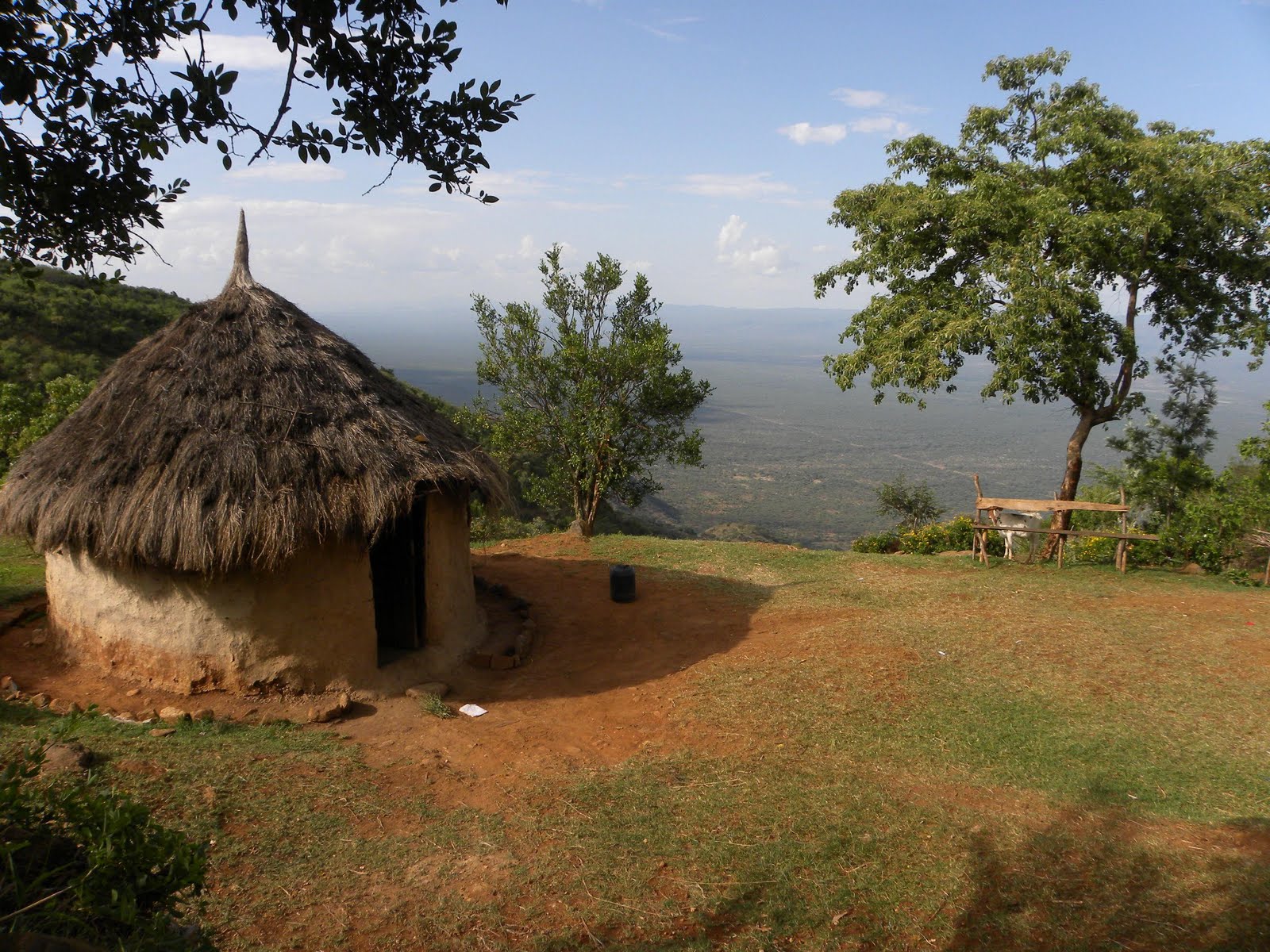
We are perched on the edge of the Great Rift Valley in Kenya and, at over 2000 metres, feel somewhat euphoric at this incredible site. The Rift Valley extends from Jordan to Mozambique and is what divided Arabia from Africa. Evolution here stretches back 25 million years and with the incredible palaeontological findings, including the bones of early ‘apeman’, we feel privileged to witness this “Cradle of Mankind”. We are camped at Lelin campsite and, like on so much of our travels, are the only guests and have the run of the place. Ilda and the girls are schooling in one of the thatched ‘bandas’ overlooking the valley below and progress seems good. The ill-fated school parcel from New Zealand has surfaced in Lusaka and is being forwarded to Nairobi where hopefully we will find it. Zara’s comprehension of math’s astounds us but reluctance to write, alarms us and Margot progresses calmly and confidently. They are both devouring books and Zara’s desire to recount her latest Peter Pan or Charlie and the Chocolate Factory brings tears to my eyes and Margot has just finished Elephant Whisperer and of course wants us to get some pet elephants! A definite disappointment on the trip has been the total lack of other families travelling. The girls have missed their friends and, other than the occasional massive overland tour truck, we have been largely solo.

After our marvelous recovery and comfort in Kampala we elected to start our journey east and travelled to Jinja and the source (so the Ugandans think) of the Nile. We set up camp at Eden Rock near the Bujugali Falls and with stunning views of the Nile up towards Lake Victoria. Our initial plan had been to drive up towards Murchison Falls National Park but with us all just recovering from our nasty Rwandan flu the prospect of 2 big days driving and big fees to see game, we preferred to relax next to the Nile. We took a boat trip out on to Lake Victoria from Entebbe to an island to visit a chimpanzee sanctuary which was interesting but exorbitant. Like the gorillas, I feel unease for these vulnerable primates whose habitat continues to diminish and, although the efforts at the sanctuary are admirable, I fear for their long term prospects. The Bujugali falls were a series of dramatic rapids on the Nile down which intrepid locals swam attached to a plastic jerry can or paddled in pint sized kayaks. It was spectacular just to sit there and watch this drama and we enjoyed a short boat trip getting a close up of the rapids as well as a view of construction of the new dam wall which will cover all of this up later this year. At the nearby Explorers camp we got a taste of the big overland trucks again and how hard they party! Although I did make enquiries, we never got to raft down the big rapids of the Nile, probably a bit epic for the girls and also not really on our agenda. There, as on many of our stops, a walk through the local community providing, always, a rich cultural experience as to how Africans live, eat, farm and play, which I hope will stay with Margot and Zara forever. The constant cry of “Wazungu” (whiteman!) always music to our ears!

The Sipi Falls appear on the Ugandan 10 000 shilling note and we camped at Lacam lodge at the top of these falls. The setting was sublime, similar to the lower reaches of the Drakensberg in RSA, and we reveled in the peacefulness of the place and the sound of the water cascading down to the rocks 100 metres below. Camping here included full board so that we ate like pigs and only a hard early morning run and a good community walk eased the conscience. I visited the local health clinic and was impressed by the service they offered. They even had a lab technician who was able to do malaria smears and basic micro. Our host at the lodge assured us the road to the Kenyan border was tarred and so we set off after school and lunch for Kenya.

The tar ended suddenly about 25km from the lodge and with that came the afternoon deluge. The dusty orange track was transformed dramatically into a muddy, slippery quagmire and we had some anxious moments deliberating what route to take and enjoyed a fair bit of drifting around the road. The BF Goodrich tyres though, despite being clogged with mud, handled admirably. This, however, was only a taste of what was to come! We skirted around Mt Elgon, a massive extinct volcanic crater, passing through many colourful villages rich with crops and activity. The border town of Suam was something out of a movie with mud and chaos! We exited Uganda without any fuss and crossed a muddy bridge into Kenya finding ourselves in a queue behind a bakkie laden with a coffin and mourners. The Kenyan immigration official was a smiling rotund woman wearing a safari hat and sipping tea, reminding me of the Lady detective from Alexander McCall Smith fame. Expecting the usual fleecing for visas I nearly hugged her when she agreed to waive the fee for the girls and then told me that there was no charge for South Africans! So we only bought one visa for “NZ” Ilda! Then to top this, the customs man filled in our carnet for the car, and for the first time ever, didn’t demand a fee of some sort.

And so it was with some enthusiasm that we slid off into Kenya giving a local a lift and very soon stopping to dig out our tow rope to help some other locals in distress. That distress was soon to be ours as dusk drew in and the mud got thicker! We were headed for the Delta Forest camp and smiling locals assured us that the road was fine and ‘got better’. Well it didn’t and the vision of that deep black mud with rutted craters will stay with me forever! My admiration for the Nissan Pathfinder though has grown enormously after it seemed to steer itself through this impossible quagmire and slipping and sliding, frequently at right angles to our intended direction, we squelched out the other end. The camp was a welcome relief and the eccentric, grandiose Kenyan pilot cum lodge owner insisted that we stay in one of his bandas and not camp. We enjoyed a hot shower and a fire and reminisced about our day in Africa! The next morning we were on horseback walking around the ‘game sanctuary’ enjoying our first smattering of Kenyan game including the habituated John the Eland and Mike and Salena, the South African white rhino, which we were able to pet!

And so it is! On we go but now our compass points east and even a bit south. We will make our way slowly to Nairobi and then on into the Masai Mara and down into the Serengeti of Tanzania.


Thursday, May 26, 2011

Uganda, Gorillas, Bugs and mud


Equator sign at Kikorongo

Kampala is the capital city of Uganda with a population of nearly 2 million and lies near Africa’s largest and the world’s second biggest freshwater lake, Victoria. We are here as guests of John and Tisha Morley who have magnanimously allowed us to stay in their beautiful home while they visit their children for half-term in South Africa. Once again a beautiful home like this is a refuge from the storm of rugged muddy tracks, rough campsites, long-drop latrines and hoards of people. A time to catch up on e-mail, blogs, schoolwork and laundry as well as get a local perspective on life in East Africa. John is as much a native here as anyone, having driven overland from the UK in the 70’s via West Africa and Uganda and stopped in Kenya, where he met his future 4th generation Kenyan wife Tisha. He is a successful self made engineer who is presently steering an Irish company here that has found crude oil at various sites in and around Lake Albert that have been drilled and capped and await government approval for extraction; a move that will change the fabric and future of Uganda forever. His laissez-faire nature is infectious and warm generosity exceptional as he instructs us on what to do in Uganda, how to work the flat screen TV and where the whiskey is kept! “Seriously, stay as long as you like”, a very tempting offer for a travel weary family recovering from a bad bout of flu!


patchwork fields Uganda

Fisherman on lake- Uganda


After our brief but wonderful stay at Kibogora Mission Hospital we are on the road again and soon stop at a coffee bean ‘factory’ nestled in the lush hills near Lake Kivu. The locals are warm in their welcome and guide us through the labour intensive process of coffee bean production from drying the berries, separating the husk from the bean, washing and a long drying process that leaves albino like beans ready for roasting. I’ll never look at a latte in the same way again. We drive on into the thick Nyangwe forest and have great sightings of beautiful L’Hoest monkeys with their white collars and silky coats and take a short walk into the depths of this rich vegetation with massive trees and towering lianas. The last elephant was killed in this forest in 1999 and reminds us how lucky we are in South Africa. We visit the excellent USAid sponsored visitor centre but balk at the short canopy walk for US$60each. Then it is on back to Kigali and Ilda entertains us with gory genocide details from her latest book and we are delayed by our repaired tyre blowing again and so arrive in the dark.

Mark and Samela Priestley live just below the British consuls’ home and enjoy wonderful views of Kigali and traditional life in the fields below their home. Their young children attend the International School of Kigali, like most of the ex-pats living here, and they enjoy quality lifestyle. We use the time to get the tyre and car shocks replaced for the second time on this trip, get some school work done and the girls get to walk the dogs and have their dose of DVD’s. A highlight in Kigali is the motorbike taxis which we use a lot and revel at being whizzed around the city. The car is fixed, visas due to expire and so we start the climb towards the Ugandan border.


Uganda appeals to me as the country where my parents lived prior to my birth and where my sister Amanda was born. Also a fascination, a bit like Rwanda, with a country that can be tortured, decimated and devastated so extensively and yet show resilience and recovery, to become the prospering and peaceful country it is now. We arrive at the border post in torrential rain and certainly seem to have caught up with the rainy season. The border crossing is quiet but we have to again go through the tiresome process of visiting first the police, then immigration and finally customs and forking out the customary fistful of US dollars. At least we get to drive on the left side of the road again and I am relieved that my comprehensive insurance is again valid.

The Ugandan town of Kisoro is nestled amongst towering 4000m high volcanoes and lies in the bottom corner of the country near Rwanda and the DRC. We opt for a clean guest house to avoid the rain and enjoy excellent chapatti and vegetable stew at one of the local eateries. The next morning we climb dramatically up a road under construction and juggle with massive lorries, bulldozers and mud. We discover later that this is one of the main arteries linking Uganda and the DRC and are relieved to get back onto tarmac and stop at the picture-postcard Lake Bunyoni with its glistening blue water and crop laden slopes cascading down to the waters edge. We watch traders arriving at the local market by dugout canoe and marvel at the tranquility of this place, touted in the guidebooks as a “Little Switzerland”.


Bwindi Impenetrable forest

Bike street seller

Our Garmin GPS takes us off the security of the tarmac onto a rutted dirt track towards the famous Bwindi Impenetrable Forest and we are gob-smacked at the dramatic transition from cash-crop agricultural land to the thick, literally impenetrable, forest that makes up the park and is home to nearly 300 of the world’s last few Mountain Gorillas. We can only pray that this tenuous border prevails. We seek refuge from the rain and camp on the verandah of the Ruhiga Community camp where we are spoilt by the locals with a wood fire and hot water for a wash. Samson, a park guide hitches a lift with us along the muddy track and we head for Buhoma, the headquarters for gorilla tracking. Alas we will only be distant spectators of this incredible experience because the age limit is 15yo and we are all coughing and spluttering which puts the gorillas at risk. Also the US$2000 price tag for the four of us is a definite deterrent!


Sandy considering his next bike for the Coast to Coast!


Crested Crane


We are on the road again, northwards up the Albertine rift towards Lake Albert and ease into the Queen Elizabeth national park. Unlike South African parks there is no gate or fence and crops and cattle give way seamlessly to buffalo, impala and the Ugandan Cob. We visit the QE pavilion after crossing the Kazinga channel linking Lakes Edward and George and over a coffee enjoy watching a herd of nearly fifty elephant grazing. This was the sight of the royal visit in 1953 and then again of the Duke of Edinburgh in 2007. We cross the equator and pose for photos where my parents stood about 50 years ago, only the rough dirt track has been transformed into a modern macadam road. We follow yet more rough tracks toward Kibale national park, this time hoping for an encounter with the chimpanzees, but are again flummoxed by age limits and viruses and Zara takes a turn for the worse overnight. Her high fever, delirium and vomiting have me digging deep into the medical kit and drawing up the Ceftriaxone and iv fluids but her thrashing refusal to have an iv line reassures me. Her Malaria test is negative and she wakes smiling with the dawn.

We view the magnificent Ndali Lodge perched on the edge of a volcanic crater lake but at US$480 a night we ease down the road to an excellent site and camp for US$10! We visit the local vanilla processing plant and learn about the lengthy process of curing and ‘sweating’ these finicky flavoursome beans which need about as much attention and TLC as a good red wine. Then we bypass Fort Portal where my Dad worked at the local hospital all those years ago and take the excellent road east to Kampala. I am struck by how things have changed in Africa since my backpacking days in Malawi and Zim in the eighties. Smooth tar roads, fancy luxury coaches and the cell phone explosion have transformed Africa beyond belief and somehow transport one too fast past the rich fabric of this complex and chaotic continent. In parts of Tanzania we witnessed a Chinese company laying broadband internet cable in areas that had neither sanitation nor piped water. What for I ask myself?

And now in Kampala and bliss. Tomorrow we try again for a primate encounter with a boat trip from Entebbe on Lake Victoria and then on up to Murchison Falls national park, the Albert Nile and perhaps a boat trip to the falls. Then beyond that, to Kenya.