Friday, May 20, 2011

Kibogora Mission Hospital and Marvelous Market

View from our place in Kibogora- Lake Kivu- Rwanda

Kibogora Mission Hospital and marvelous markets

There is nothing quite as sickening as that feeling of having been ripped off. I felt numbly around my various pockets but it was gone. My treasured leather wallet from Bodrum in Turkey was now in the clutches of some Congolese or Rwandan urchin and with it my credit card, NZ drivers licence and 15 000 Rwandan Francs (R180.00). I know that I had opened it when Ilda needed change to buy spinach and then I had been marveling at massive rolls of handmade twine, golden buckets of spicy sauce and piles of multi-coloured beans, as well as clutching the hands of Margot and Zara, and then it was gone. Shock and humiliation. Never put a purse in your pocket, watch your money, and don’t carry credit cards. The market on the edge of Lake Kivu in Rwanda and on the border of Democratic Republic of Congo was heaving. Every imaginable vegetable; pyramids of blood red tomatoes, gnarled, purple sweet potatoes, large spreads of drying cassava, robust green cabbages and fresh crisp spinach; bleating goats, squealing black pigs and cow, freshly slaughtered in roadside abattoirs, with thick red blood dripping in rivulets into the orange African earth. A man with a machete hacks at white ribs while another slices through rich burgundy fillet and another delicately manipulates metres of slithery grey entrails ensuring that nothing is wasted. We are the only “Wazungu” in a sea of black smiling faces and are constantly accompanied by a scrum of persistent urchins and curious onlookers. We seek refuge in a ‘café’ and suck thirstily on cold Coke. Then on we go and I lose my wallet. I enlist the help of a responsible looking local and in broken French explain my predicament. Before long my sorry tale is being broadcast widely and there seems to be genuine disappointment at the Wazungu’s misfortune. Soldiers arrive brandishing offensive looking weapons, the crowd has swelled alarmingly and I am relieved to escape having being assured that they will return my wallet to the hospital should it be found. I have my doubts and after a struggle manage to speak to my bank in RSA and cancel cards. To cheer us up we opt to use the motorbike taxi service and the four of us enjoy an exhilarating ride up the hill and back to our haven at Kibogora Mission Hospital.


Classroom at Kibogora


Street Scene- Kibogora


Entrance Class!- Kibogora


We were meant to stop off here for a month but Ilda, Margot and Zara were only given a 2 week visa and at US$180 I was reluctant to extend it for a further fee. My RSA passport was a breeze and I got 90 days for free! Kibogora hospital is perched high up on a hilltop above Lake Kivu with the most exquisite views up this rift valley lake to smoking volcanoes lurking in the distance in Uganda, Congo and Rwanda. Our accommodation is in a beautiful 3 bed roomed house with all the comforts we could wish for and is in stark contrast to our park-home box we lived in for a year at Mseleni. We were welcomed with a lovely hot dinner, clean made beds, filter coffee and cold cool drinks and milk in the fridge. Why can’t RSA hospitals treat their staff like this? Thank you so much Sheila for all your kindness and hospitality.

The hospital feels about the same size as Mseleni but has about 250 beds to Mseleni’s 160 and this is probably explained by there being 21 patients to a ward the same size as ours, where we had 10. The wards though are immaculate, patients clean and our nurses would do well to pay this place a visit. Big difference though is family members hang around, feeding and caring for their relatives. 9 of the 12 doctors here are Congolese, enjoying better salaries than they would get back home, and the standard of care seems generally pretty good. There is a constant stream of ex-pats visiting for various lengths of time and I was fortunate to hook up in theatre with a retired American surgeon who was completing a 6 week stint. He was doing lots of hernia repairs, open prostatectomy’s and thyroidectomy’s, so it was fun to scrub up. I spent a day in the “ED”, which is really a couple of small rooms where clinic referrals are triaged to the various wards and procedures sent to minor theatre. I tried to see a few patients but it was fraught; me taking a history in broken French via nurse speaking similar broken French and asking patient in local dialect, translating back to me and then me recording in English. Oooof, too hard, so helping in OR was more appealing. Lots of the minor surgery (that we would normally do in ED) is done by nurses and ALL the anaesthetics, including GA’s, Ketamines and spinals are done by nurse anaesthetists, which I found remarkable. They seem very competent but seemed to stick to standard recipes comprising Thiopentone, sux, halothane and Pancuronium. Referrals are near impossible and forget about fancy stuff like CTscans, histology and image intensifiers! That said, these guys seem to do a good job, but a striking difference with our wards at Mseleni is the much lower acuity here. Patients that wouldn’t get a look in the door at Mseleni spend 3 days in bed here, why, I don’t know. The other staggering figure is their HIV rate of 3% compared with our 30%.


Heading to the market


Beans


Moto-Taxi


Rwanda Flag


Zara Art


Morning prayers happen at 07.30 and all the staff seem to attend. The singing is good but a sermon in local dialect is heavy going at 07.30! Then there is a brief handover from night nurses after which the doctors meet for a brief chat. They all start by shaking hands, which I found touching, but they don’t do grand rounds like we did at Mseleni. Otherwise, they do a horizontal midline incision for their c-sections, which I found unusual, and their hospital stores supplies the “ED” 3x per week where I struggled with our stores at Mseleni who thought that once a fortnight was ok! I was able to demonstrate the rapid “grab-and-slash” South African method of circumcision which was well received and managed to give a demonstration of trauma ultrasound in French, which I thought was a fair effort!

So, although brief, it has been very interesting to see what happens at a rural mission hospital in the depths of Africa. More than that, this has been a breath of fresh air, living in a lovely home with fabulous views, great food and an opportunity for the girls to get a solid week of school done. Sadly we missed our school delivery in Lusaka so that Ilda is a wee bit short of teaching material. However the road is rich and I am certain that as we head up into the mountains of Uganda we will all learn lots!


Boats on Lake Kivu


Coffee Cooperative- Coffee beans drying


Dried Coffee beans after 15 days


Workers doing the road to Kibogora under Chineese direction


Tea Plantation


Some more tea!


Monday, May 9, 2011

Now, that's Africa!

Mpulungu Bazaar- Lake Tanganyka- Zambia

Now, That’s Africa! May 2011

Well negotiations didn’t go so well with chief engineer Dismas from Burundi and the price had escalated dramatically over the w.e, so that we were contemplating around US$1500 to get us and the car up the lake to Bujumbura and Burundi. This would have holed our budget somewhat so we decided to drive. Given that we were on the west side of Tanzania we elected to stick to that side and follow the route up along Lake Tanganyika. This was probably unwise given that an expat had mentioned ‘bandits’ and our guidebook had talked about some pretty dire roads. However this was the route that Livingstone had taken so long before and it seemed to be a challenge that we had to take.


900km of track through Western Tanzania...eat my dust and shake, shake Rock&Roll!

What followed was the most brutal, jaw rattling, teeth shattering, dust infiltrating 863.4 kilometers we have ever experienced. I can only describe the road as a sort of rough farm track vaguely linking villages and traversed at times by massive road works of the embryonic new Chinese road. By the end of it both we and the car were battered and haggard with fine red dust infiltrating all orifices and the cars suspension floating alarmingly. There was a short section through one village of about 500m of (the only) tarmac where we managed to puncture when a screwdriver pierced and badly lacerated the tyre. The wheel change was witnessed and applauded by about 100 local school kids and went smoothly. I’m sure that the tyre would have been written off back home but in true African style was repaired and seems to be working well so far.


Dusty road through Tanzania


Transport of coals on bike- Tanzania


The border crossing from Zambia into Tanzania was no more than a padlocked gate and we had to arouse some lad from his afternoon siesta to stamp our passports. The Tanzanian side was somewhat grander and the visa price reflected this. No longer did the SADAC privileges apply and we had to buy visas for all of us including the children who had previously been exempt. At least we didn’t have to pay a whole lot of carbon and various other taxes this time but the border fees have been a big drain on our finances. I was alarmed to see the immigration officer putting sheaves of paper into his receipt book to prevent copies of my receipt being recorded, allowing him, of course, to pocket the US$120. I did mention this and he assured me that (in a heavy African accent) “this is a government book!” The road was challenging and we got excited whenever we got over 40km/h! Our first stop was in a delightfully chaotic town called Sumbawanga where we resided in relative luxury in the “country club” and got reacquainted with excellent Tanzanian beer while enjoying a marvelous dinner cooked on a charcoal stove. Charcoal manufacture is huge in Tanzania and doing a fine job at decimating the native forests.


Market in Tanzania


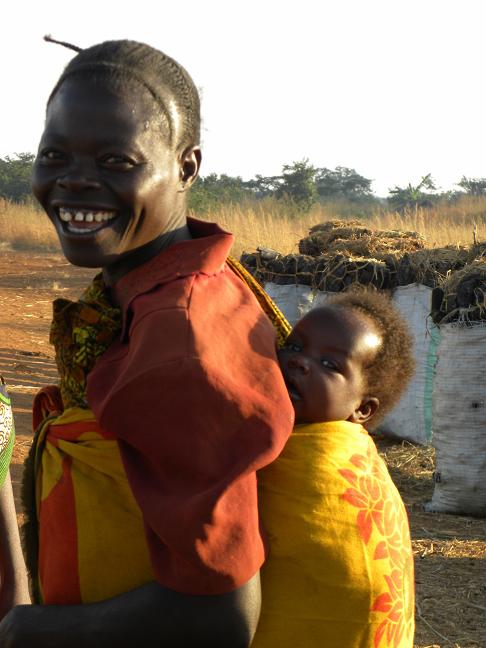
Women and child- Tanzania


The next day we set off unsure as to where we would get to and drove through Katavi National Park, one of the less popular Tanzanian parks. The bush was thick and game sparse but what was most incredible were the Tsetse flies. They would literally hitch a ride on the car and when we stopped for a pee we had to work in pairs with one of us batting flies while the other peed! Vicious beasts indeed. We lunched late in Mpanda and were assured by a local that we would easily make Uvinza by that evening. How wrong he was. The road was extremely isolated and worse than ever, but thankfully dry, and we saw little habitation but passed within a few kilometres of massive refugee camps which remain from the Rwandan genocide era. This made us reluctant to free camp. UNICEF, UNHCR, Red Cross and numerous other Aid vehicles were prolific and drove along this track at incredible speed alternating with the odd massive truck that kept us alert and offered more than one close shave. Night came and we felt edgy driving here in the dark but were rewarded with some amazing night game viewing, lots of owls, a mongoose and, incredibly, a rare African civet. Our GPS Garmin put us in the village but there was no sign of it and we were guided a kilometre or so further to a cluster of huts and basic buildings. We found lodging in what can only be described as a men’s truck stop but at that stage had no choice and the proprietor Ahmed seemed welcoming enough. Ilda and the girls crashed in the little room and I slept in the car as the electric locking wasn’t working thanks to dust buildup I think.

Do you want some dust! We sell it for...free!


The Moslem call to prayer had us all up at about 04.30 and so we were able to make some progress before breakfast. It was quite something to get back onto the torrid road, all filthy and tired, but we picked up a local woman and an amputee and gave them a lift into town which cheered us all up. The amputee directed us to an excellent ‘café’ for breakfast where, for the price of a cappuccino back home, we enjoyed piles of chapattis, samoosas, buns and copious sweet, milky tea. We ambled around the market and being the only white folk in town enjoyed many stares and frequent cries of “wazungu!”

Bazaar near Uvinza- Tanzania


Fish Market- Tanzania


First Puncture- North-West Tanzania


We finally hit the main tar road linking Tanzania and Rwanda and with it the endless procession of stinking, belching trucks and tankers. But we were oblivious. The ecstasy of a smooth road and no dust brought us immense joy and we sped on towards Rwanda, dodging potholes and playing cat and mouse with lorries. Our last night in Tanzania was in relative luxury in a roadside guest house where we enjoyed a warm wash, had the car rinsed and cooked omelets over a charcoal fire.


Children observers


Breakfast with sweet Chai and Chapatis

Rwanda- Rice Paddies

Arriving in Rwanda was like arriving on another planet. The post genocide Rwanda is undergoing a reformation of immense proportions and is the darling baby of every aid agency on the globe. The President is determined to develop an economically self sustaining and developed country. The country is CLEAN. Plastic bags are banned! The roads are immaculate with very few potholes and villages are neat with well laid out shops and sidewalks. Kigali is buzzing with high tech flashy banks, shopping centres and working traffic lights. Construction is evident everywhere. Unfortunately there are prices to match and so accommodation has been steep. We have used the time here to regroup….do all our washing, restock, puncture repair, sort out visas and get the car repaired, I hope. And yesterday we visited the Genocide memorial and museum. I have seldom felt so disgusted and horrified by anything. Nothing is hidden and the imagery is blatant. I was left feeling somewhat ill and not surprisingly didn’t sleep too well that night. The brutality is incomprehensible.

Then today we walked up to one of the hotels on the hill where a lot of the expats hang out. We enjoyed a lovely swim, café lattes and pain-aux-chocolate. We then spent a fantastic day with Mark Priestley and his family, braaing, drinking good red wine and contemplating this perplexing country. Mark is an economist attempting to develop an EU style union between Rwanda and her immediate east African neighbours. What a project. Thanks Mark for a wonderful touch of normal life and a fabulous braai.

Hopefully we will get things sorted in the next day or so and then hope to get to Kibogora Hospital and start some work!


In fact things didn't work out with the Visa Authorities who wanted U$200 for extention of Ilda + kid's Visa so...we will only stay the 14 days in Rwanda, 1 week at Kobogora Hospital. This is flexibility for you!


List of names from victimes of Genocide- Genocide Museum- Kigali


Genocide Museum- Kigali City Centre

Malaria Monday


Side Road Market- Zambia

Malaria Monday. April 2011

Monday is Malaria day and called Malaria Monday. We religiously take our meds and for the girls the incentive has always been an ice-cream until, that is, we hit the bush proper where a cold Coke has to suffice. The girls all take weekly Mefloquine and I take daily Doxy, mainly because I got 3-day insomnia on Mefloquine and figured that at least one of us should try not to go psychotic. We are now ‘camped-out’ at the bottom of Lake Tanganyika in a town called Mpulungu in Northern Zambia. We are having a fairly drawn out negotiation with various cargo ships to get us and the car up the Lake to Bujumbura, the capital of Burundi. Lake Tanganyika is the longest lake in the world and the second deepest after Lake Baikal in Siberia with a maximum depth of 1 395m, which is 642m below sea level! It is part of the Great Rift Valley, the tail end of which we were near in Zululand. The Lake is absolutely stunning with perfect clear fresh water and apparently over 200 known species of fish and many more yet to be documented. We have been feasting on fish most days and have fun striking a deal down at the fish market where the many boats pull in every morning having been out fishing all night. Swimming has been fine too thanks to an absence of crocs, at last, and, I think, Bilharzia. We are staying in a little lodge called Nkupe, after the local fish, which is back-packer-ish but lovely and only one field back from the lake. The owners must have taken pity on us because they insisted that we take a thatch chalet for the same price as camping, so we are enjoying relative luxury with electricity, a light and even a fan. Thank goodness we brought our mozzie nets because the mozzies here are hungry and despite nets, coils, mozzie-mats, the fan and mesh on the windows, we still managed to get bitten! This is slightly concerning given that malaria is pretty prolific here and our host has only just recovered from a bout.


Poteholes in Zambia!


One thing about this itinerant life on the road is that one becomes pretty organized. Everything has its place and we have become expert at erecting and striking camp which we can knock off in about 30 minutes. A typical morning would involve waking up with the dawn and stuffing the girls into the car in their sleeping bags while Ilda and I packed up the tents and then enjoying a drive through a game park at sunrise and breakfast at a suitable view point. If we are not moving on then we would return to camp for a few hours of school after which the girls would find a nearby termite mound or tree or rocks and become engrossed in their fantasy world. Our life has certainly become simple and we are enjoying this escape from the complexities of our ‘normal’ lives. I can’t remember when we last had meat to eat and instead we enjoy fresh fish and vegetables from the local market and are surviving just fine without our Lattes and Lasagnas. The girls have embraced reading with determination and it is not unusual to see them curled up with a book and Zara is impossible at lights out when her torch seems to burn longer than the rest. Margot is now reading what I would call adult-level novels and is presently absorbed by “Elephant Whisperer”.


Family pics- Mudimondo- Zambia


Using last bit of fuel in Zambia


After our amazing stay at The Lion House in Lusaka we made a pretty rapid traverse of Zambia in order to get to the Lake for the scheduled ferry. As it turns out we could have taken our time but c’est la vie. We did stop at a beautiful place called Mutinondo Wilderness where we had a spectacular camp site in the bush near a crystal clear stream and amongst dramatic granite domes. We enjoyed a fabulous walk along the river with swimming, plunging into waterfalls and even a bit of canoeing. That night we lay on our backs on the granite dome gazing in wonder at the carpet of glittering stars before turning in for the night and snuggling up next to our crackling fire.

Market- Mpulungu (Late Tanganyka) Zambia


Today is Labour Day so of course no one is working! My Burundi ship chief engineer, Mr Dismas, assures me that once the tonnes of cement are loaded into their hold he will be able to put our car on top. The crane looks dubious and we are still haggling about prices but with a bit of luck we will be in Bujumbura by the end of the week and then on to Rwanda and a month of work!


Fish market- Mpulungu- Lake Tanganyka- Zambia


Mpulungu- Zambia

Fishermen in Mpulungu- Lake Tanganyka- Zambia